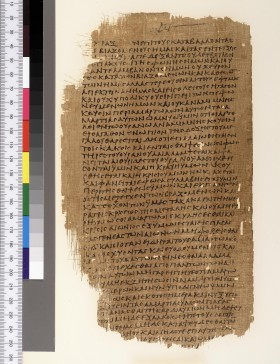
Zodiac Calendars and Angelic Teaching in the - Dead Sea Scrolls 2
Zodiac Calendars and Angelic Teaching in the - Dead Sea Scrolls 2
Angels are often associated with secret knowledge but not usually with authentic mathematics. In several of the Dead Sea Scrolls there is a complicated network of parallel stories in which angels impart secret knowledge of […]
Archaeology … that’s when people dig in the dirt and find fossils and artifacts that just go in a museum, right? Wrong. It’s so much more than that. So, why is archaeology so important? First, archaeologists do not find “fossils,” that’s paleontology, which is not included under archaeology. Trust me, you don’t want to make […]
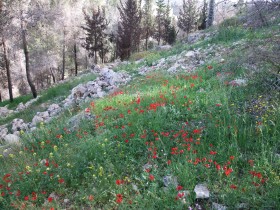
By: James H. Charlesworth George L. Collord Professor of New Testament Language and Literature and director of the Dead Sea Scrolls Project at Princeton Theological Seminary In the Spring, Passover is time for reflective celebration. The great festival is also time for joyous expectation, as humans relish in the return of warm sunshine and blooming […]
By: Andrew Perrin, McMaster University, Canada George A. Barton Fellow W.F. Albright Institute of Archaeological Research Although it has been sixty-five years since the initial discovery of the Dead Sea Scrolls, the full critical publication of these materials from the mid to late Second Temple period was only completed within the last few years. […]
By: C.D. Elledge with Olivia Yeo Who really wrote the Dead Sea Scrolls? Twenty years ago, the available options for understanding the identity of the Dead Sea Scrolls Community were relatively concise. Consensus associated the origins of the community with the ascetic Essenes. A few dissenting opinions highlighted its commonalities with the priestly Sadducees or […]
By: Kaitlynn Anderson Saturday, September 21st, was a beautifully sunny, breezy day. I gathered my equipment and headed off to Westborough, MA. My plan? To see Dr. Eric Meyers lecture on the Dead Sea Scrolls and experience the exhibit at the Museum of Science. The lecture took place at the Good Shepherd Lutheran Church, and […]

By: Anthony J. Frendo The Maltese archipelago lies practically at the centre of the Mediterranean, roughly midway between the eastern and the western Mediterranean Sea, and between the island of Sicily to its north and Libya to its south. Given this unusual location – between the Near East and Classical worlds and at the epicenter […]
By: Jolanta Mlynarczyk, University of Warsaw, Andrew W. Mellon Fellow The aim of my research at the Albright was to study an assemblage of ca. 200 oil lamps discovered at Qumran by archaeologists from the Ecole Biblique at the settlement itself and in the caves (1951-1956) as well as at Ein Feshkha (1958). The importance […]

By: Christopher A. Rollston Archaeological sites in the Middle East have been ransacked, pillaged, and plundered for many decades. The motivations of the actual pillaging are normally economic: the pursuit of marketable artifacts. That is, the pillagers wish to find objects that can be sold to collectors. Of course, the motivations of the collectors who […]
By: Jonathan Rosenbaum President Emeritus, Gratz College For generations, academic journals have been deemed the appropriate venue for the initial publication of ancient inscriptions and artifacts. Nevertheless, last fall, the New York Times became the source of an editio princeps when it announced the discovery of a “faded papyrus fragment” that seemed to be “first […]
By: Miryam T. Brand, New York University, National Endowment for the Humanities Fellow My fellowship at the Albright this year has enabled me to further develop the topic of my dissertation with the aim of producing a book for academic readers: Evil Within and Without: The Source of Sin and its Nature as Portrayed in […]
By: James D. Tabor, The University of North Carolina at Charlotte On the other days they dig a small pit, a foot deep, with a paddle of the sort given them when they are first admitted among them; and covering themselves round with their garment, that they may not affront the rays of God, they ease themselves […]
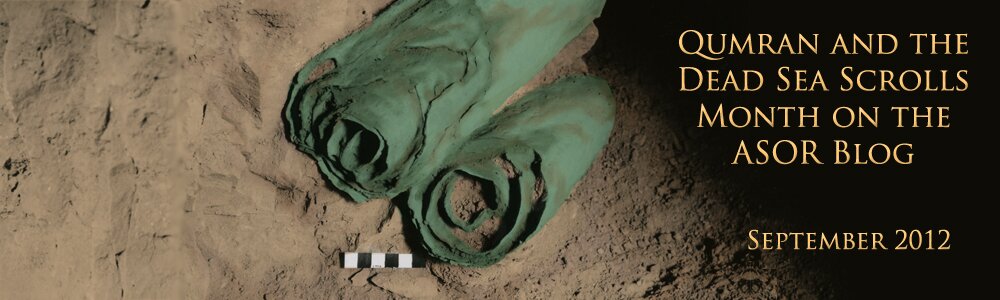
It has been a successful month here on the ASOR blog, with posts by many leading scholars on all aspects of Qumran and the Dead Sea Scrolls! We have had seven posts covering everything from the archaeological evidence for a sect inhabiting the site of Qumran, to translations and interpretations of portions of the Dead […]
By: C.D. Elledge Jewish hope in resurrection of the dead plays an important role in the history of Western religions. It was principally during the Second Temple Period that Jews developed increasing innovation in the varied forms in which they envisioned a blessed afterlife – including hope in resurrection of the dead, the belief that […]
By: Daniel A. Machiela When most people think of the Dead Sea Scrolls, they likely (and understandably) envision either a devoted band of Jewish sectarians sequestered away in the harsh Judean wilderness, or a stunning cache of biblical manuscripts centuries older than we possessed before the late 1940’s. These two groups of texts – the […]
By: Molly Zahn When Geza Vermes first coined the term “Rewritten Bible” a half-century ago, I suspect he did not have any idea of the impact that term would make in Qumran studies. I also suspect that the phenomenon to which he applied the term seemed to him clearly defined and easily recognizable. It certainly […]
By: Hannah K Harrington Studies have focused both on the exclusionary and expansionist character of holiness in the Temple Scroll. On the one hand, it has been argued that the stringent purity restrictions in this text are due to the protection of the holiness of the sanctuary and exclusion from evil (Regev). On the other […]
By: Eyal Regev In a couple of articles published in BASOR and Revue de Qumran[1], I have analyzed the social aspects of the inhabitants of kh. Qumran using social-scientific theories, without direct consideration of the scrolls. I have examined the spatial organization and architecture of kh. Qumran using Hillier and Hanson’s Space Syntax Theory, commonly […]
1QHa 16.5-17.37 By: James H. Charlesworth Introduction The Thanksgiving Hymns are the creation of poets who became the Community of priests who left the Temple (or were cast out, as indicated by this collection); they eventually settled at Qumran. The poetry rivals, sometimes, the heights obtained by the stellar poets who bequeathed us the Psalter […]
EnglishEnglishFrenchPowered by Translate By: Jodi Magness Qumran - the site associated with the Dead Sea Scrolls - is located eight and a half miles south of Jericho, by the northwest shore of the Dead Sea. The site was excavated from 1951-1956 by Roland de Vaux of the École Biblique et Archéologique Française de Jerusalem. More recently, […]