
Lessons Learned from a New - ASOR Archives - Page 3 of 32 - The
Lessons Learned from a New Collaborative Archaeological Adventure
It all began over a decade ago. Then Director General of the Department of Antiquities of Jordan (DoA), Fawwaz Al-Kraysheh, sat me down in his office, looked me straight […]

Large deposits of domestic pottery from primary contexts in Ptolemaic Lower Egypt are uncommon and seldom presented in their entirety. […]

The clay bread stamp presented here was found at in a monastic complex dating to the Late Byzantine-Early Islamic period at Khirbet et-Tireh, approximately 16 km northwest of Jerusalem. […]
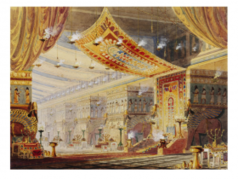
Though I was acquainted with the figure and work of Diodorus of Sicily, it only became familiar to me thanks to my work on another Greek author, Ctesias of Cnidus. Fifteen-odd years ago, I started to […]

The evidence that we have for the language(s) spoken by the Philistines is not plentiful, but what we do have is interesting (though far from conclusive). Two types of evidence predominate: (1) inscriptions that may […]

2017 has officially begun! We’d like to thank all of our Friends of ASOR (and lurkers) who come back to the ASOR Blog to read article after article! Here’s a look back at the five most popular articles. […]

A big thanks to everyone who attended and helped make theASOR Annual Meeting an amazing event. We couldn’t have done it without you! Also, to everyone […]

There was indeed a “Sumerian bowl” found in the late 1950s near Lake Titicaca, at the site of Hacienda Chúa, about 75 miles north of La Paz. The dark bowl has a prominent rim and a […]

Why does the Bible matter? Why do we continue to talk about, turn to, and study a diverse assortment of narratives, poems, laws and prophetic proclamations at least two millennia […]

In a recent Friends of ASOR podcast, I spoke with Uroš Matić over Skype about his recent Near Eastern Archaeology 79.3 article, “Gender in Ancient Egypt: Norms, Ambiguities, and […]

Stretching from Egypt to the Indus River, the Persian Empire was the largest empire yet seen in the ancient Near East. Typically, the Hebrew Bible depicts ancient […]

Of course, there is no such thing as a Sumerian king list. The text usually referred to as the ‘Sumerian King List’ (SKL) is a composition somewhere between a literary text and a list proper […]

Marriage is ubiquitous in human societies. But any examination of marriage in ancient Egyptian society requires us to disengage from modern social and […]

Budin’s article considers the symbolic meanings of the face, breasts, vulva, and branch images which typify the schematic piriform pendants which first emerged in Tell el-‘Ajjul in the Late Bronze Age and spread […]

In a recent Friends of ASOR podcast, I called Jennie Ebeling, co-director of the Jezreel Expedition in Israel, to talk about her recent Near Eastern Archaeology 79.3 article, “Engendering the Israelite Harvests.” Her article talks […]

In contrast, the antiquities market is how most modern hoaxes are circulated, including forgeries of ancient texts. Alleged ancient texts are often said to come from particular archaeological sites, but there is rarely a way to verify such assertions. […]

Elephantine Judaeans suggests that the emergence of a Scripture-based Yahwism—the “victorious” form of Yahwism in the succeeding Hellenistic and Roman […]

One motivation that unites Greco-Roman pilgrimage traditions, some Jewish pilgrimage traditions, and early Christian pilgrimage is the search for authenticity. This is found in ‘proofs’ like miracles, and the way […]

Letters from Baghdad is the first full-length documentary film about Gertrude Bell, Middle Eastern explorer and once the most powerful woman in the British Empire who was instrumental […]

Earlier this year, I wrote a post extolling the virtues of spending several days in San Antonio at a world-class resort attending the presentation of world-class papers by world-class scholars. I said it before and […]